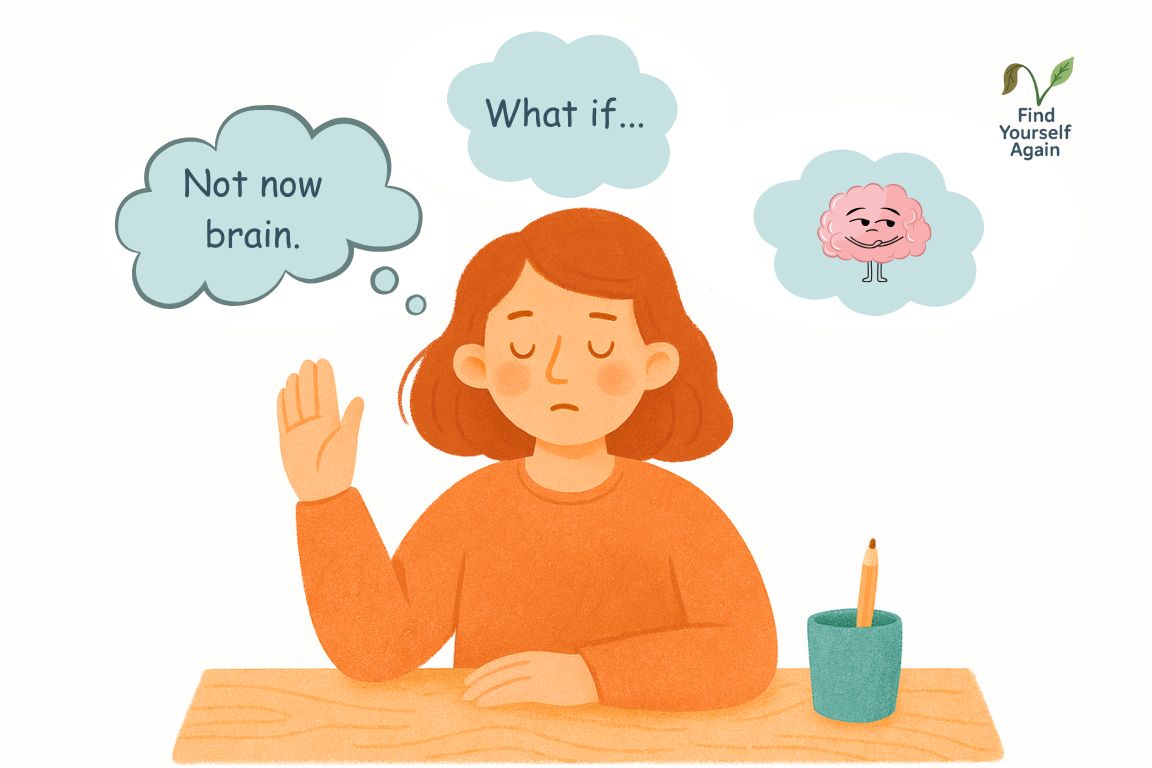
Anxiety doesn’t wait for the right time to show up. It interrupts your day when you least expect it.
You might be working, lying in bed, sitting in traffic, or standing in line. Suddenly, your heart races. Your stomach feels tight. Your mind starts throwing one thought after another, faster than you can keep up.
It can feel impossible to stop once it begins.
That’s because your brain is trying to protect you. It’s searching for danger. But in doing so, it sometimes forgets that you’re safe.
What you need in that moment is not another distraction, not a motivational quote, and not even deep breathing right away. What helps most is something simple and powerful: a way to remind your brain that you’re still in control.
This is where the “Name and Command” technique can change everything.
What This Technique Actually Does
The Name and Command technique is a way to interrupt anxious thinking before it becomes overwhelming.
It’s based on how the brain works under stress.
When anxiety takes over, the emotional part of your brain (the amygdala) becomes louder. It starts sending out alerts like “something’s wrong” or “we need to fix this.”
Your rational mind goes quiet, and you start reacting instead of thinking.
By naming what’s happening and then giving it a calm, clear command, you activate the logical part of your brain again. It’s like switching the lights back on in a dark room.
Instead of letting anxiety drive, you gently take back the wheel.
How It Works Step by Step
When you feel the anxiety rising, pause for a second. Even one breath of space can help.
- Name it.
Say to yourself what’s happening in plain words.
“This is anxiety.”
“This is overthinking.”
“This is panic trying to take control.”
Naming it separates you from it. You’re no longer lost inside the feeling. You’re an observer. - Command it.
Now tell your brain what to do next. Speak with calm authority, like you’re talking to a scared friend or a child who needs reassurance.
“Not now.”
“Sit down.”
“I’m safe.”
“I’m in charge.”
You don’t need to shout or force it. The power is in the steadiness of your tone. You’re teaching your brain that it can stop reacting because you’ve got this covered.
- Ground your body.
Touch something near you. Feel your feet on the floor. Notice one sound, one color, one texture.
This step matters because the brain calms down faster when the body joins in.
Grounding reminds you where you are and brings you back to the present. - Repeat if needed.
Your brain might not listen right away. That’s okay. You’re building a habit of safety, not chasing perfection. Each time you do it, the mind learns that anxious thoughts don’t need to control your body.
Why This Works
Anxiety convinces you that you have to believe every thought you think.
But thoughts aren’t facts. They’re reactions. They’re noise.
When you say, “This is anxiety,” you are labeling it as what it is: a temporary state, not the truth.
When you follow that with “Not now” or “Sit down,” you’re reminding your brain that you don’t have to react to every mental alarm it sends.
That’s the key difference between anxiety and awareness. Anxiety reacts. Awareness leads.
The technique works because it connects the rational and emotional parts of the brain again.
You’re not pushing anxiety away. You’re acknowledging it and choosing not to follow it.
This sends a safety signal through your nervous system, lowering your heart rate, easing your breath, and helping your body remember that it’s not in danger.
What It Feels Like When It Starts Working
You’ll notice a quiet pause appear between your thoughts and your reactions.
The thoughts might still be there, but they’ll sound less convincing.
You’ll start to recognize the moment before the spiral instead of realizing it after it’s already happened.
And slowly, that changes everything.
You begin to trust yourself again.
When It’s Hard to Do
There will be days when it feels impossible to calm your mind.
When that happens, go back to the smallest step.
Touch something near you. Feel your breath move through your chest. Then whisper one sentence:
“Not now. I’m safe.”
Even if your body doesn’t believe it yet, keep saying it gently. You’re reminding your system what calm feels like. Over time, it learns to return there faster.
What Makes This Technique Work So Well
Because people often wait for anxiety to disappear before they live their life again.
But healing doesn’t come from waiting. It comes from responding differently when anxiety appears.
This technique gives you something that most anxious moments steal from you: CHOICE.
The choice to step out of the spiral.
The choice to speak to your mind instead of listening to it blindly.
The choice to stay grounded in the moment instead of getting pulled into what-ifs.
It’s not about silencing thoughts. It’s about remembering who’s in charge when they get loud.
A Gentle Reminder
You don’t need to be perfect at this. You just need to start.
The more often you practice, the faster your brain learns that it can trust your voice over your fear.
And if you find it hard to do this on your own, that doesn’t mean you’re weak. It just means your mind has been loud for a long time.
Therapy can help you strengthen that calm voice until it feels natural again.
You are not your anxiety.
You are the person who speaks back to it.
📩 Want to learn more practical tools to quiet anxiety – in a way that actually works for you?
Book an online therapy session with me today.
Let’s train your brain to listen – not run wild.
