When most people think of anxiety, they picture panic attacks or obvious worry. A racing heart. Sweaty palms. Someone visibly stressed.
But in therapy rooms, anxiety rarely walks in announcing itself that clearly.
More often, it shows up in ways people have been living with for years without realizing what it is. They describe habits, body sensations, personality traits, and relationship patterns. They think it is just how they are.
Then we start connecting the dots.
Here are some common anxiety symptoms people often overlook.
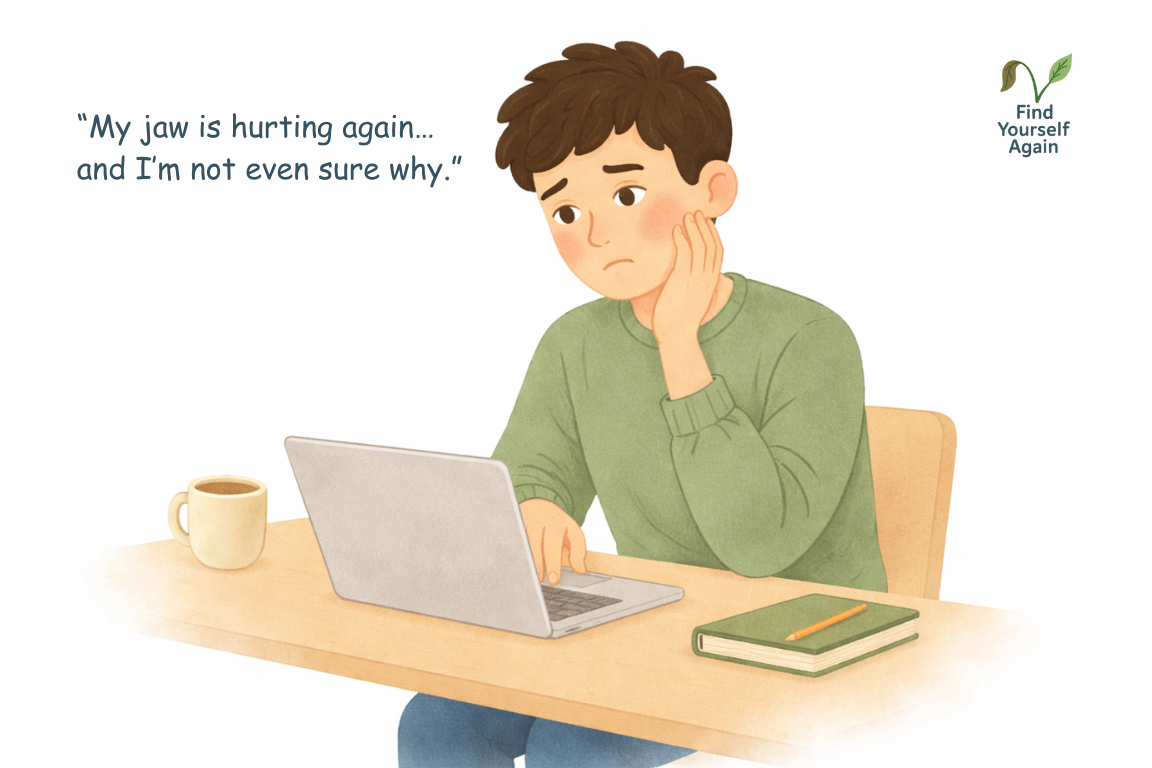
1. Constant Jaw Clenching or Teeth Grinding
Many people do not realize how much tension they carry in their face.
You might catch yourself clenching your jaw while working. Or you wake up with soreness in your temples. Sometimes dentists are the first to notice because of teeth grinding.
This is your body bracing.
Even if your mind feels relatively calm, your nervous system may still be slightly activated. Anxiety often settles into the muscles. The jaw, shoulders, neck, and upper back are common places.
Over time, that tension becomes your baseline. You stop noticing it because it feels normal. But your body has been holding a low level of alertness for longer than it should.
2. Feeling Irritable for No Clear Reason
People often feel guilty about this one.
They say, “I do not know why I am snapping. I am just tired of everything.”
When your system is constantly scanning for problems, it gets overloaded. Small inconveniences feel bigger because you are already stretched internally. A loud noise, a delayed reply, someone asking one more question can feel like too much.
It is not that you are an angry person. It is that your nervous system does not have much buffer left.
Irritability is often anxiety that has run out of space.
3. Over Explaining Yourself
You send a simple message but then add three more lines to make sure you were not misunderstood. You apologize even when you did nothing wrong. You clarify your tone in conversations. You replay interactions afterward to check if you sounded strange.
This usually comes from a fear of being misjudged or rejected.
Anxiety often treats social disapproval like danger. So your brain tries to prevent it before it happens. You are not being dramatic. You are trying to feel safe.
The exhausting part is that the reassurance rarely lasts long. Your mind keeps scanning for possible cracks.
4. Avoiding Things You Actually Care About
This is one of the most misunderstood symptoms.
You want to apply for the job. You want to attend the event. You want to speak up in the meeting.
But you do not.
From the outside, it may look like procrastination or lack of confidence. From the inside, it often feels like dread that is hard to explain. Your body reacts strongly to the possibility of failure, embarrassment, or being judged.
Avoidance brings relief in the moment. That relief teaches your brain that avoidance works. So it repeats the cycle.
Over time, anxiety quietly shrinks your life, not because you do not care, but because your nervous system is trying to protect you from discomfort.
5. Needing Reassurance but Not Being Able to Hold Onto It
You ask, “Are you sure everything is okay?”
They say yes.
You feel better. Then the doubt returns.
People often feel ashamed of this. They think they are too needy. But what is usually happening is a strong need for certainty.
Anxiety struggles with uncertainty. It wants guarantees. It wants clear answers. The problem is that life rarely gives absolute certainty.
So even after reassurance, your brain continues scanning for hidden risks.
It is not about attention. It is about trying to calm a system that does not trust calm.
6. Feeling Drained After Social Interaction
You might not identify as socially anxious.
You can hold conversations. You can present at work. You can attend gatherings.
But afterward, you feel exhausted.
Often this is because you were monitoring yourself the entire time. You were aware of how you sounded. Whether you were interesting enough. Whether you were talking too much. Whether people were reacting normally.
That constant internal checking uses energy.
By the time you get home, you are not just tired. You feel depleted.
7. Struggling to Relax Even When Nothing Is Wrong
This is one people describe with confusion.
They say, “I finally have time to relax, but I feel restless.”
You sit down in the evening and instead of settling, your mind starts reviewing the day. Or planning tomorrow. Or searching for something you might have missed.
When your system has been in alert mode for a long time, calm can feel unfamiliar. Your body has learned to expect the next problem. So it stays slightly ready.
You may not feel panicked. Just unable to fully switch off.
8. Physical Symptoms That Feel Medical
Many people with anxiety spend time wondering if something is physically wrong.
Upset stomach before routine situations. Sudden warmth in social settings. Feeling slightly lightheaded in crowded places. Random tightness in the chest.
Anxiety activates your body’s stress response. That response affects digestion, breathing, heart rate, and muscle tension.
If it happens often enough, it starts to feel like something serious must be wrong.
The fear of the sensation then makes the sensation stronger. This creates a cycle that feels very real and very frightening.
9. Perfectionism That Feels Like Pressure, Not Pride
There is a difference between wanting to do well and feeling like you have to do everything perfectly to avoid disaster.
Anxiety driven perfectionism feels heavy. If I make a mistake, something bad will happen. If I disappoint someone, it will define me.
It is not about high standards. It is about preventing rejection or failure at all costs.
This kind of pressure makes simple tasks feel intense and draining.
10. Living With a Constant Sense of Tension
Some people do not experience dramatic anxiety episodes. Instead, they live with a low level hum.
You are rarely fully relaxed. Rarely fully settled. There is always a subtle alertness in the background.
You function. You work. You show up.
But inside, you feel slightly braced most of the time.
Because it is not extreme, you assume it is just your personality.
It may not be.
Why So Many People Miss These Signs
Anxiety does not always look chaotic. A lot of the time it looks like you being responsible, capable, and holding everything together.
You meet deadlines. You show up for people. You handle things. So no one questions what is happening inside. Sometimes you do not question it either. You just assume this constant tension is part of who you are.
But if you are tired of feeling slightly braced all the time, if your body rarely feels fully relaxed, if your mind struggles to switch off even when nothing is wrong, that matters.
You do not have to wait for things to get worse before you take it seriously.
Talking to a therapist can help you untangle what is anxiety and what is just life stress. It can help you understand why your body reacts the way it does, and how to gradually feel safer in your own thoughts and sensations.
You deserve more than just coping. You deserve to feel steady.
If you are ready to explore this, you can book an appointment and start having that conversation. Sometimes the first step is simply admitting that what you are carrying feels heavier than it should.
And you do not have to carry it alone.
