Have you ever splashed cold water on your face to calm down?
Or taken a cold shower when your thoughts wouldn’t stop racing?
That wasn’t random. That was cold therapy – and it’s one of the most powerful, natural tools we have for anxiety and stress relief.
In this blog, I’ll walk you through what cold therapy is, how it works psychologically and physiologically, and how to use it safely for anxiety, panic attacks, and stress – even from your own home.
What Is Cold Therapy?
Cold therapy, also called cold exposure or cryotherapy, involves exposing your body to cold temperatures for short periods to trigger a calming response.
Types of cold therapy include:
- Ice packs
- Cold showers
- Ice baths
- Cryotherapy chambers (clinics)
- Cold compresses (neck, chest, wrists)
- Cold water immersion (pools, tubs, rivers)
And surprisingly, these aren’t just “shock your system” techniques – they’re backed by science.
How Cold Therapy Helps with Anxiety (Step-by-Step Breakdown)
1. It Slows Down Racing Thoughts
Cold exposure shocks the system just enough to interrupt your mental loop. If you’re stuck in anxious spirals or experiencing panic, this sudden change shifts your focus from your mind to your body — giving you an instant pause.
Example: Hold an ice cube or cold can in your hand for 30 seconds. That sharp sensation forces your brain to focus on your body instead of anxious thoughts.
2. It Stimulates the Vagus Nerve
The vagus nerve connects your brain to your body – especially your heart, lungs, and gut. Cold therapy stimulates this nerve, triggering the parasympathetic response (a.k.a. your “rest and digest” mode).
Benefits of vagus nerve stimulation with cold:
- Slows heart rate
- Regulates breathing
- Reduces cortisol
- Increases feelings of calm
How to stimulate it: Place a cold pack or wet cloth on your neck or the back of your head for 1–2 minutes. This signals your brain to enter “rest and digest” mode.
Source: Psych Central explains this vagus-cooling technique in anxiety regulation.
3. It Releases Mood-Boosting Neurochemicals
When your body touches cold water, it releases:
- Norepinephrine (boosts mood, focus)
- Endorphins (natural painkillers)
- Dopamine (reward chemical)
That’s why so many people report a “cold shower high” – it’s not just in your head. Your body is actually calming you down.
Best Ways to Use Cold Therapy for Anxiety (With Steps)
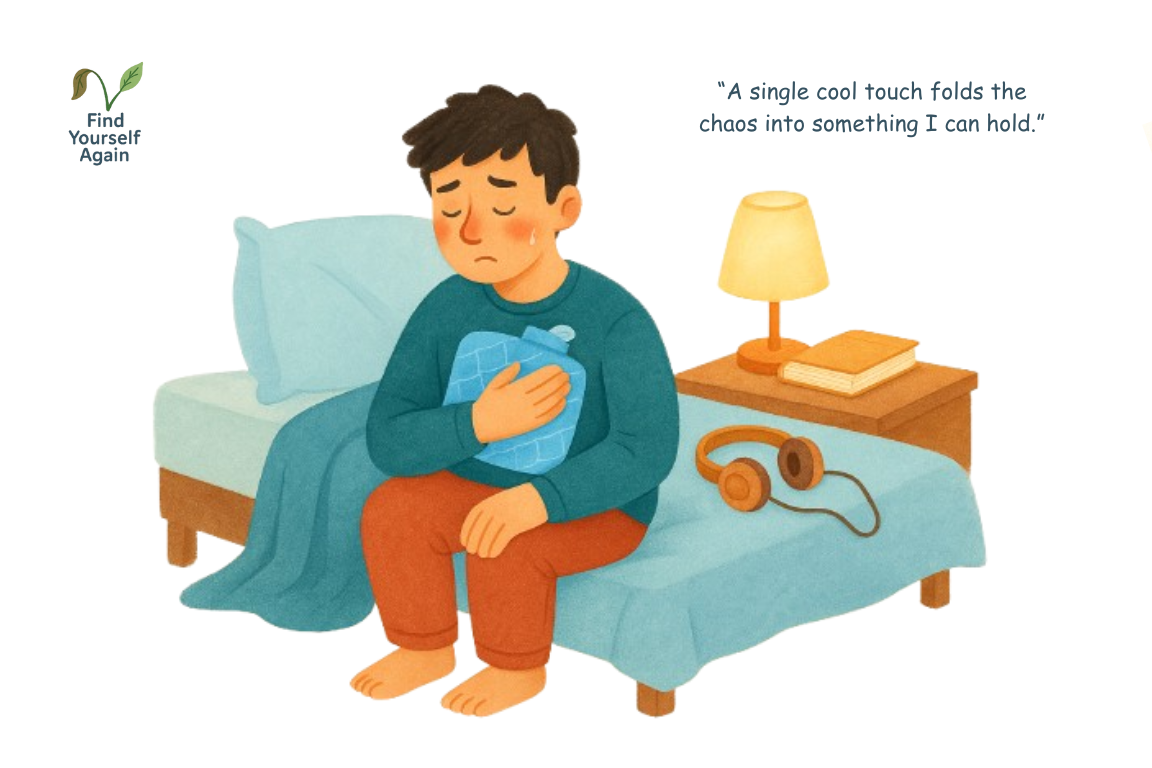
1️⃣ Ice Pack on Chest for Panic Attacks
How to do it:
- Take a soft gel ice pack or frozen towel.
- Place it gently on your sternum/chest.
- Breathe slowly, noticing the cold.
- Stay with the sensation for 1–2 minutes.
Why it works: It reduces chest tightness and grounds you in the moment – especially during panic.
2️⃣ Cold Shower to Reduce Anxiety
How to do it:
- Start your shower with warm water.
- Slowly turn it to cool, then cold.
- Let water hit your neck, shoulders, and spine.
- Stay under for 1–3 minutes.
- Focus on breathing through the discomfort.
Don’t worry if it’s uncomfortable at first – it gets easier with time and trains your nervous system to tolerate stress.
Tip: Even 30 seconds at the end of your shower helps. Over time, your stress threshold will rise.
3️⃣ Cryotherapy for Anxiety Relief
Cryotherapy chambers expose your body to very cold air (-100°C to -140°C) for 2–3 minutes under supervision. This method is best used in clinics or wellness centers for long-term mental health support.
While not essential, many clients report:
- Better sleep
- Reduced anxiety
- Improved focus
Note: Cryotherapy is effective for some, but not required. Always consult a health professional first.
4️⃣ Ice Bath for Stress Relief / Cold Water Immersion
Ice baths (or cold dips) are intense but powerful:
- Fill a bathtub with cold water (~10–15°C / 50–59°F).
- Add ice if needed.
- Step in slowly – start with feet, then legs, up to chest.
- Stay for 1–3 minutes, breathing deeply.
- Dry off and warm up immediately.
These are popular with athletes and high performers – but increasingly used for mental resilience training.
⚠️ Safety note: If you feel dizzy or numb, get out right away.
The Mental Health Benefits of Cold Therapy
Scientific evidence (from Stanford Center on Longevity, Healthline, Psych Central, and NCHPAD) shows the following benefits:
- Reduces symptoms of anxiety and panic
- Lowers cortisol (stress hormone)
- Improves mood and emotional regulation
- Increases energy and alertness
- Enhances sleep quality
- Builds nervous system resilience
Cold therapy can be a life-changing daily ritual – especially for people who struggle with racing thoughts, overthinking, burnout, or panic attacks.
Safety Tips Before You Start
Cold therapy is powerful — but always keep these in mind:
- Avoid if you have heart conditions or uncontrolled blood pressure.
- Don’t overdo it – 1 to 3 minutes is enough.
- Always warm up gradually after exposure.
- Check with your doctor if you’re unsure.
From teenagers battling panic attacks to adults overwhelmed by burnout — this simple tool often helps where nothing else has.
It doesn’t replace therapy.
But it supports therapy – beautifully.
And most importantly: It’s accessible, affordable, and backed by science.
Need personalized anxiety tools that actually work?
Book an online therapy session – and let’s build your mental health routine together.
