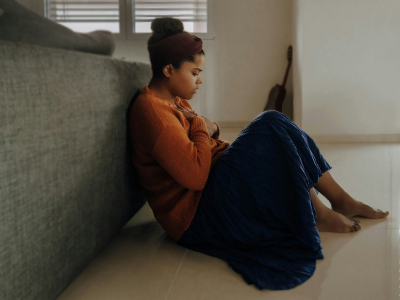
When anxiety hits, your body is already on alert. Instead of forcing a deep breath, try exhaling slowly.
“Everyone keeps telling me to take a deep breath, so why does breathing deeply sometimes make my anxiety feel even worse?”
If you’ve searched something like that, chances are you’ve already tried.
You’ve taken a deep breath. Then another. Maybe you’ve tried filling your lungs as much as possible, hoping that one proper breath will finally make your body calm down. But instead, your chest still feels strange, you may feel dizzy, and now you’re paying even more attention to every breath you take.
This can be particularly frightening when anxiety has already put your body on alert.
The first thing to remember is that new, severe, or concerning breathing difficulties should always be medically assessed. But if you’ve been medically checked and anxiety keeps making your breathing feel wrong, there may be a reason why forcing yourself to take deeper breaths isn’t always helpful.
Why Deep Breathing Can Sometimes Make Anxiety Feel Worse
When you’re anxious, your body is already preparing for something.
Your nervous system has moved into a state of alert. Your heart may beat faster, your muscles can tighten, and your breathing may change without you consciously noticing it. Even if you’re sitting safely at home, your body can behave as though it needs to be ready for danger.
And when you suddenly become aware of your breathing, it’s natural to think you need more air.
So you breathe in deeply.
Then you do it again because the first breath didn’t feel satisfying enough.
But when you’re already breathing more than your body needs because anxiety has changed your breathing pattern, repeatedly forcing large breaths in can sometimes make you feel even more uncomfortable. You may become lightheaded or dizzy, feel tingling sensations, or become increasingly aware of your chest.
Why am I feeling dizzy?
Why doesn’t this breath feel right?
Why do I still feel like I need more air?
And before long, you’re no longer simply breathing. You’re monitoring it.
What to Do Instead of Forcing a Deep Breath
Sometimes you don’t need to work harder to breathe in.
You can allow the inhale to happen naturally.
There is no need to pull in as much air as possible or keep searching for that one perfect breath that finally feels satisfying. Take a comfortable breath, then gently allow yourself to breathe out slowly.
The exhale can be where you shift your attention.
Not because it is a magic technique that instantly stops anxiety, but because it takes you away from the constant effort of trying to get more air into your body. You don’t have to force the breath out either. Simply let it leave slowly and naturally.
Then allow the next inhale to come on its own.
Your body knows how to do that.
You don’t have to find the perfect breath.
You can breathe comfortably, let the breath leave slowly, and allow the next inhale to arrive on its own.
Why a Slow Exhale Can Help You Feel Less Overwhelmed
When anxiety is high, there is usually a great deal happening inside you.
You’re thinking ahead. You’re checking your body. You’re trying to understand what is wrong. And often, you’re trying desperately to make the uncomfortable feeling stop.
That effort can become exhausting.
Allowing yourself to exhale slowly can create a small pause in all of that. For a few moments, you aren’t trying to fix your breathing or force yourself to relax. You’re simply allowing your body to do something it already knows how to do.
You breathe out.
You let the next breath arrive.
You don’t have to keep checking whether you’re doing it correctly.
If You Keep Feeling Like You Can’t Get Enough Air
This is one of the most distressing sensations anxiety can create.
You may know you’re breathing, but it doesn’t feel convincing. You keep trying to take a deeper breath because you’re waiting for that feeling of relief, the moment when your lungs finally feel completely full.
But sometimes, the more you chase that feeling, the more attention your mind gives to your breathing.
You notice the sensation.
You become worried about it.
You try to fix it.
Then you notice it even more.
That doesn’t mean the sensation isn’t real. It means anxiety has made your nervous system highly alert to what is happening inside your body.
And sometimes, stepping out of that cycle means doing less rather than more.
Maybe you’ve already searched:
“Why does deep breathing make my anxiety worse?”
“Why do I feel like I can’t get enough air when I’m anxious?”
“What can I do right now?”
There’s nothing strange about wanting an immediate explanation when your body feels frightening. AI can help you organise what you’re noticing, put words to the questions you want to ask, or help you think through what you might want to discuss with a professional.
But it cannot examine you, rule out a medical cause, or tell you whether new or severe breathing difficulty is safe to manage at home. If something feels new, severe, or concerning, medical assessment matters more than an AI answer.
Use AI to help you find the words. Don’t make it carry the responsibility of deciding what is happening to your body.
You Don’t Have to Breathe Perfectly to Calm Down
If you’re anxious right now, you don’t have to take the deepest breath possible.
You don’t have to count every inhale.
You don’t have to keep checking whether enough air is getting into your lungs.
Allow yourself to breathe comfortably. Let the breath go out slowly. Then allow the next inhale to happen naturally.
You may not feel completely calm straight away.
That’s okay.
The goal isn’t to make anxiety disappear within sixty seconds. Sometimes the first change is simply that you stop fighting with your body quite so much.
And sometimes, that is where calm begins.
If anxiety has made you constantly aware of your breathing, afraid of panic, or exhausted from wondering whether something is wrong with you, you don’t have to keep carrying that fear alone.
Sometimes the hardest part isn’t the anxiety itself.
It’s feeling frightened by something as simple and automatic as your own breathing, while everyone around you tells you to “just take a deep breath.”
You don’t have to keep trying to understand anxiety alone or figure out why your body feels this way.
I can help you understand what is happening, work through the anxiety beneath the symptoms, and find ways of feeling more in control again.
If you’re ready to talk, you can book an appointment today.
You might ask Google. You might ask ChatGPT. You might just keep asking yourself.
When something in your body feels frightening, it is natural to look for an answer before you feel ready to talk to someone. These are the kinds of questions people may find themselves typing when anxiety makes breathing feel strange.
Why does deep breathing make my anxiety worse?
Why can’t I take a satisfying deep breath?
Why do I feel like I can’t get enough air when I’m anxious?
What should I do when breathing exercises make my anxiety worse?
Can anxiety make it feel hard to breathe even when I’m safe?
How do I calm anxiety when deep breathing doesn’t work?
That is okay. AI can help you put a confusing experience into words or work out what you want to ask next. But when breathing symptoms are new, severe, or concerning, a professional assessment matters more than finding the perfect answer online.
Quick answers
Questions you might be asking
Sometimes the question you type into Google is simply the question you haven’t known how to ask anyone else.
Why does deep breathing sometimes make my anxiety worse?
If anxiety has already changed your breathing pattern, repeatedly forcing large breaths can sometimes increase uncomfortable sensations such as lightheadedness, dizziness, tingling, or increased awareness of your chest. If breathing difficulty is new, severe, or concerning, it should be medically assessed.
What should I do instead of taking deep breaths when I’m anxious?
Instead of forcing a large inhale, try allowing the inhale to happen naturally and gently letting the breath out slowly. You do not need to force the exhale or make the technique perfect. The aim is to stop fighting with the breath quite so much.
Why do I feel like I can’t get enough air when I’m anxious?
Anxiety can make you highly alert to sensations inside your body, including your breathing. You may notice the sensation, become worried about it, try to fix it, and then notice it even more. That sensation is real, but new or concerning breathing difficulties should not automatically be assumed to be anxiety.
Can ChatGPT help me understand my anxiety symptoms?
ChatGPT can help you organise your thoughts, put words to what you’re experiencing, and prepare questions for a professional. It cannot examine you, rule out a medical cause, or replace medical or mental health care when that care is needed.
When should I talk to a counsellor about anxiety?
You do not have to wait for anxiety to become a crisis. If you feel frightened by your symptoms, keep getting caught in the same cycle, or find that anxiety is affecting your everyday life, counselling can give you space to understand what is happening and work through it.
If you are experiencing new, severe, or concerning breathing difficulties, seek appropriate medical assessment rather than assuming the symptoms are caused by anxiety.
