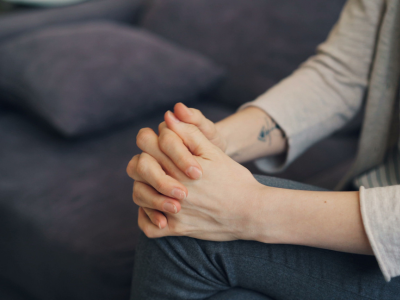
Sometimes you don’t feel anxious first. Your hands do.
You’re sitting in class. Answering an email. Waiting for someone to reply. Getting ready for a difficult conversation. Lying in bed when you were supposed to be sleeping.
And then you notice it.
Your fingers are cold. Your palms feel clammy. Maybe your heart is beating a little faster. Maybe you rub your hands together and think, Why are my hands suddenly freezing?
And this is where the worry can begin.
You start checking your hands. You notice how cold they are. Then you notice your heartbeat. Then your breathing. Then you wonder whether this is anxiety at all.
If you’ve landed here because you have asked yourself that question more than once, you are probably looking for more than a one-line explanation.
You want to know what your body is doing, why it keeps happening, what you can do when it happens, and whether you should actually be concerned.
So let’s start there.
Yes, anxiety can make your hands feel cold
When your brain detects stress, your body can shift into a protective state often described as the fight-or-flight response. Part of that response is narrowing blood vessels in the skin and extremities, which can reduce blood flow to your hands for a while.
That can leave your fingers feeling cold, clammy, numb, tingly, or simply different from how they normally feel.
It does not mean your body has suddenly stopped working properly. In many situations, it means your body is prioritising what it believes you might need to deal with first.
The strange part is that you may not consciously feel anxious enough to explain what your hands are doing.
What if I don’t even feel anxious?
This is one of the most confusing parts.
You may honestly think, “I’m fine.” You’re getting through the day. You’re answering messages. You’re working, studying, talking to people. Nothing dramatic is happening.
Then your body gives you a small clue.
- Your hands suddenly feel colder than usual.
- Your shoulders have been tense for hours.
- Your jaw is clenched without you noticing.
- Your stomach feels unsettled.
- Your breathing has become shallow or quicker.
- You cannot quite relax, even when nothing is happening.
None of these sensations automatically means you have an anxiety disorder. But they can be signs that your nervous system is carrying more stress than your conscious mind has labelled as “anxiety.”
Sometimes the mind says, I’m okay.
The body says, We have been holding a lot.
And then something else can happen: you start watching your hands
This is the part that often gets missed in generic explanations of cold hands and anxiety.
The cold sensation itself may be harmless. But if it scares you, your attention can lock onto it.
You check your fingers.
You rub them together.
You compare one hand with the other.
You Google the symptom.
You check your pulse.
You wait for your hands to feel “normal” again.
And now your attention is feeding the alarm.
This is why reassurance can sometimes work for five minutes and then stop working. You feel better, notice your hands again, wonder if something is wrong, and start checking all over again.
You don’t have to wait until it gets worse.
If your body has been carrying anxiety quietly for a while, you do not need to prove that you are struggling “enough” before asking for support.
Why are my hands cold and sweaty at the same time?
Cold and clammy hands can feel especially confusing because coldness and sweating seem like they should not happen together.
But stress can activate the sympathetic nervous system, which affects both blood flow and sweating. So during a stressful moment, your hands may feel cold while also feeling damp.
This is one reason people describe anxiety as a very physical experience. You are not “making it up.” Your body is responding to something it has interpreted as important.
What can I do when my hands suddenly go cold?
The first instinct is often to make the sensation stop immediately.
But there is another way to approach it: help your body feel safer instead of repeatedly checking whether the sensation has disappeared.
Try this the next time you notice the coldness
“My hands feel cold.” You do not need to immediately decide what it means.
Keep the breath comfortable. The goal is not to take huge breaths or force yourself to calm down.
Use a warm room, comfortable clothing, or gentle movement. Avoid repeatedly checking whether they have warmed yet.
Let your body settle in the background rather than making the sensation the centre of your attention.
You are not trying to win a fight against your nervous system.
You are showing it, little by little, we do not need to keep treating every sensation as an emergency.
A better question than “How do I make my hands warm?”
Try asking:
Maybe you had been answering messages from someone you are worried about.
Maybe you were avoiding a conversation.
Maybe you have been sleeping badly for weeks.
Maybe work has been relentless.
Maybe you have been telling everyone you are fine because there has not been a convenient moment to admit that you are not.
The point is not to turn every cold hand into a psychological mystery.
The point is to become curious about patterns.
The FYA check-in: what is your body trying to tell you?
Before you Google the symptom again, pause for 60 seconds.
- What happened just before I noticed it?
- What else is my body doing right now?
- Am I trying to understand the sensation, or am I trying to make sure nothing is wrong?
- What am I afraid this sensation might mean?
This does not replace medical advice. It is simply a way of separating noticing your body from fearing every message it sends.
But what if my cold hands aren’t anxiety?
This matters too.
Cold hands are not automatically an anxiety symptom. Temperature, normal differences in circulation, medications, and several medical conditions can also play a role.
If your hands are persistently cold, especially if this is new for you, or if you notice significant colour changes, pain, persistent numbness, sores, weakness, or other concerning symptoms, it is worth speaking with a doctor rather than assuming anxiety is the explanation.
For example, Raynaud’s phenomenon can cause fingers to become very cold and change colour, particularly in response to cold or stress. Other conditions can also cause persistent coldness.
Understanding anxiety should never mean ignoring your physical health.
Can ChatGPT tell me whether my cold hands are anxiety?
You might have already asked ChatGPT.
And honestly, that makes sense.
When you are lying awake wondering whether a strange physical sensation is normal, typing the question into a search box can feel much easier than telling another person, “I’m scared something is wrong with me.”
AI can be useful for learning general information, organising your thoughts, and helping you find questions to take to a professional.
But there is an important line.
If you keep asking the same question in slightly different ways until you finally get the reassurance you want, the search itself can become part of the checking cycle.
That distinction matters when anxiety is becoming a pattern rather than a one-off question.
When should I talk to someone about anxiety?
You do not need to be having panic attacks every day. You do not need to be unable to get out of bed. And you do not need to have a perfect explanation for what is happening.
It may be worth talking to a counsellor if you notice that your body is constantly on alert, you spend a lot of time monitoring sensations, you repeatedly seek reassurance, you avoid situations because of how your body might react, or anxiety is quietly taking up more of your day than you want it to.
Sometimes the thing that brings someone to counselling is not one dramatic symptom.
It is the exhaustion of having to keep managing yourself.
Counselling can give you a place to slow the whole pattern down: what you notice, what you fear it means, what your mind does next, and what your body has been carrying underneath all of it.
If this feels familiar, you can start here.
You do not have to arrive with the right words. You can simply begin with what has been happening and work it out from there.
One last thing about your cold hands
Your hands are not betraying you.
They are not proof that you are weak. They are not proof that you are losing control. And they are not a diagnosis by themselves.
Sometimes they are simply responding to cold.
Sometimes they are responding to stress.
Sometimes they are one small physical clue that something in your life deserves a little more attention.
You do not have to become an expert at decoding every sensation your body produces.
You can learn to notice it without immediately fearing it.
And if anxiety has become something you keep having to manage alone, you can bring that to counselling too.
You don’t have to figure it all out first.
For the things you don’t know how to say, Find Yourself Again offers a space to make sense of what you’re experiencing, without needing to have it all neatly figured out before you begin.
Quick answers
Can anxiety really make your hands cold?
Yes. Stress and anxiety can activate the body’s fight-or-flight response, which can narrow blood vessels in the hands and make them feel cold or clammy.
Why are my hands cold when I don’t feel anxious?
Anxiety does not always feel like obvious fear. Your body can show signs of stress before you consciously recognise what is happening. Cold hands can also have causes unrelated to anxiety, so the overall pattern matters.
Why are my hands cold and sweaty when I’m nervous?
Stress can affect both blood flow and sweating. That combination can leave your palms feeling cold, damp, or clammy.
Can worrying about my cold hands make them feel worse?
It can. If the sensation makes you worried, you may start monitoring your hands and other body sensations closely. That extra attention can keep the alarm system switched on and make sensations feel more noticeable.
Should I keep checking my hands until they feel normal?
Repeated checking can become part of a reassurance cycle. It can be more helpful to notice the sensation, respond gently, and return your attention to what you were doing while also getting medical advice if symptoms are persistent or concerning.
When should I see a doctor about cold hands?
Consider medical advice if cold hands are persistent or new, or if they occur with significant colour changes, pain, persistent numbness, weakness, sores, or other concerning symptoms. Do not assume every physical symptom is anxiety.
Can counselling help if my anxiety mainly shows up in my body?
Yes. Counselling can help you understand the connection between what is happening in your life, how you interpret physical sensations, and the patterns that keep anxiety going. You do not need to have every symptom figured out before starting.
Can I use ChatGPT when I’m anxious?
ChatGPT can be useful for general information and reflection, but it cannot assess you in the same way a qualified mental health professional can. If repeated reassurance-seeking from AI is becoming part of the anxiety cycle, it may be worth bringing that pattern into counselling.
Sources & further reading
For general medical information about cold hands, blood-vessel constriction, and when persistent symptoms may need assessment:
British Heart Foundation: When should I worry about cold hands and feet?
Harvard Health: Hand pain and discomfort, including cold and numb hands
American Society for Surgery of the Hand: Why Are My Hands Always Cold?
This article is for general education and is not a diagnosis or a substitute for medical care.
