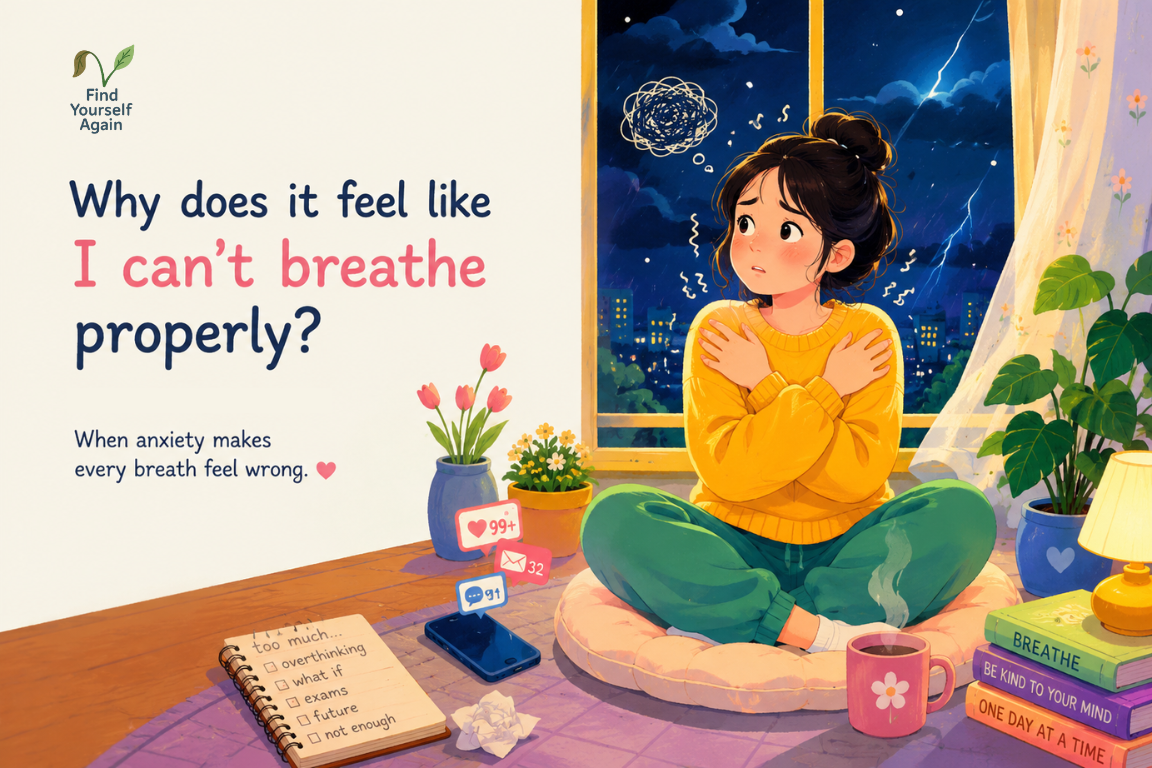
“Why does it feel like I can’t breathe properly?”
If you’ve searched that question today, chances are you weren’t just curious. You were scared.
Maybe you were sitting at your desk when your chest suddenly felt tight. Maybe you woke up in the middle of the night feeling like you couldn’t get enough air. Or perhaps you’ve taken ten deep breaths already, but none of them feel satisfying. You keep trying again, hoping the next one will finally feel “normal.”
It can be frightening when something you’ve done effortlessly your entire life suddenly feels difficult. And when your breathing changes, it’s natural for your mind to jump to the worst possible conclusion.
The first thing to know is this: breathing difficulties should never be ignored. If your symptoms are new, severe, or you’re worried about your physical health, it’s important to seek medical care. But if you’ve been medically evaluated and told everything is physically okay, yet the feeling keeps returning, anxiety may be playing a much bigger role than you realise.
Why Does Anxiety Make It Feel Like You Can’t Take a Deep Breath?
One of the biggest misunderstandings about anxiety is that people think it only lives in the mind. In reality, anxiety often introduces itself through the body long before you even recognise you’re feeling anxious.
Your breathing becomes quicker. Your muscles tighten without you noticing. Your chest feels heavy, your throat feels strange, and suddenly every breath becomes something you’re paying attention to. The more you focus on it, the more uncomfortable it feels.
Many people describe it in almost identical ways. “It feels like my lungs won’t fill properly.” “I keep yawning because I can’t get enough air.” “I know I’m breathing, but it doesn’t feel like it’s reaching the bottom of my lungs.”
The sensation feels incredibly real because it is. Your body is experiencing something real. The difference is that the cause isn’t always a problem with your lungs. Sometimes it’s your nervous system asking for attention.
Why Does It Feel Worse When I Think About My Breathing?
Have you ever noticed that the moment you start checking your breathing, it suddenly feels awkward?
It’s a little like becoming aware of how you’re walking. Something you’ve done naturally for years suddenly feels unnatural because you’re paying close attention to every movement.
Breathing works much the same way. The more your mind checks whether you’re breathing correctly, the more pressure it places on something that normally happens automatically. That pressure can make the sensation feel even more uncomfortable, creating a cycle that’s difficult to step out of.
Why Does Anxiety Feel Like a Heart Attack?
This is one of the most common fears people search online.
A racing heart, chest tightness, dizziness, shaky hands, sweating, and feeling unable to breathe can all be deeply frightening. When several of these happen together, it’s understandable why so many people worry they’re having a heart attack.
That’s exactly why it’s important not to self diagnose. If you’re experiencing chest pain, sudden breathing difficulty, or symptoms that concern you, seek urgent medical attention. Once physical causes have been ruled out, many people discover that anxiety was creating symptoms they never imagined it could.
Why Can’t I Calm Down Even When Nothing Is Wrong?
Because your body doesn’t always respond to facts. It responds to what it believes.
You might know you’re safe. You might even tell yourself, “There’s nothing to worry about.” But if your nervous system still feels under threat, logic alone rarely switches those feelings off.
This is why so many people become frustrated with themselves. They think, “I know this doesn’t make sense. So why can’t I stop feeling this way?”
The answer isn’t that you’re weak. It’s that your body and your mind aren’t having the same conversation yet.
What Is the Butterfly Hug?
The Butterfly Hug is a simple grounding technique that involves crossing your arms over your chest and gently tapping your shoulders, one side at a time, in a slow rhythm.
It was originally developed by trauma therapists working with survivors of a natural disaster who needed a gentle way to help people reconnect with the present moment. Today, many people use it during moments of emotional overwhelm because it gives the mind something steady to focus on without demanding that everything feels better immediately.
To try it, cross your arms comfortably over your chest, place each hand on the opposite shoulder, and begin tapping left and right at a slow, natural pace. Let your breathing do whatever it wants. You don’t need to force deep breaths or try to relax perfectly. Simply notice the rhythm for a minute or two and allow yourself to be exactly where you are.
What If It Doesn’t Work Straight Away?
That’s okay.
One of the hardest parts of anxiety is expecting yourself to feel better immediately. When that doesn’t happen, it’s easy to believe you’ve failed.
The Butterfly Hug isn’t about making panic disappear in sixty seconds. It’s about giving your body a different experience. Sometimes you notice your shoulders soften. Sometimes your breathing feels slightly less tight. Sometimes the only change is that your thoughts slow down enough for you to realise you’re safe.
Small changes still count.
When Should I Reach Out for Support?
If you’ve started avoiding places because you’re afraid your breathing will change, if you’re constantly checking your body for signs that something is wrong, or if anxiety is making everyday life feel exhausting, you don’t have to keep carrying it alone.
Many people wait until they’re completely overwhelmed before asking for support. You don’t have to reach that point. Sometimes the most important step isn’t finding all the answers. It’s having a space where you don’t have to keep pretending you’re okay while your mind is working overtime.
You deserve support that helps you understand what’s happening with kindness, not judgement. And sometimes, that’s where feeling like yourself again begins.
If reading this felt familiar…
… you don’t have to keep trying to figure it out on your own. Sometimes the hardest part isn’t managing the anxiety. It’s carrying it in silence.
If you’re ready for support, you can book a counselling appointment whenever you feel ready.
