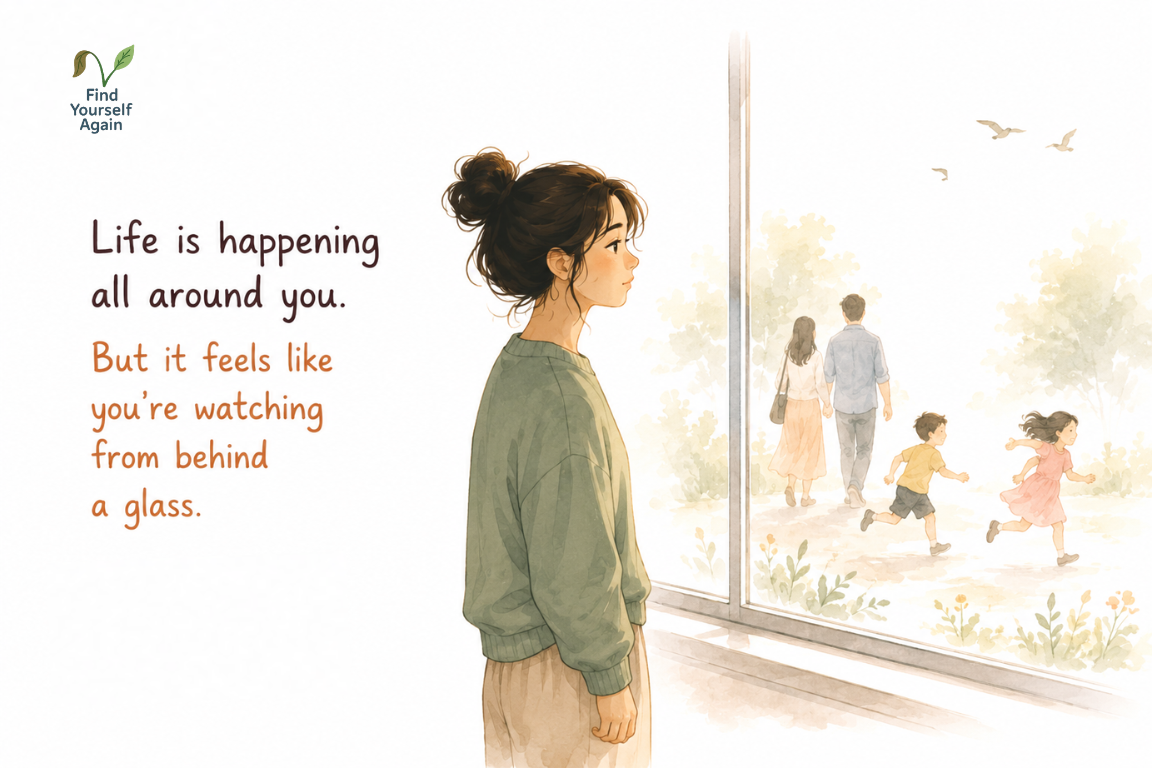
One of the hardest things to explain is wanting to cry but being completely unable to. You know you’re hurting. You replay conversations in your mind, your chest feels heavy, and there’s a constant sense that something inside you needs to come out. Yet no matter how badly you want the release that tears often bring, nothing happens.
It’s understandable that this leaves people wondering, “Have I become emotionally numb?” or “Is something wrong with me?”
The answer is often far more reassuring than you might expect.
The inability to cry usually isn’t a sign that you’ve stopped feeling. More often, it’s a sign that your mind has been protecting you for longer than you realize. The human brain isn’t designed only to experience emotions. It’s also designed to help us survive them. Sometimes that means allowing us to cry. At other times, it means quietly placing those emotions behind a locked door until it believes we’re safe enough to face them.
Your Brain Doesn’t Erase Pain. It Learns To Hide It.
People often imagine emotional numbness as something that suddenly appears after a major life event. In reality, it usually develops much more gradually.
Think about the last few years of your life. Perhaps there was constant academic pressure, a relationship that left you emotionally exhausted, responsibilities that never seemed to end, family conflict, financial worries, or grief that you never truly had time to process. Each experience asks your mind to carry a little more than it did the day before.
At first, we cope remarkably well. We tell ourselves we’ll deal with it later because there are exams to finish, deadlines to meet, people to look after, or simply another day to get through. The problem is that “later” often never arrives.
Eventually, your brain adapts. Instead of processing every emotion fully, it begins reducing your emotional intensity so you can continue functioning. This isn’t denial. It’s survival. The difficulty is that the same system protecting you from overwhelming sadness can also make it difficult to access your emotions when you genuinely want to.
Sometimes The Real Problem Isn’t That You Can’t Cry. It’s That You Never Felt Safe Enough To.
Many of us grow up believing emotions should be controlled rather than understood. Children quickly learn what is accepted in their family. Some are comforted when they cry. Others are told they’re being dramatic, too sensitive, or that crying is a sign of weakness.
Children don’t argue with these messages because they depend on the adults around them. Instead, they adapt.
Imagine a little boy who cries after falling down and hears, “You’re fine. Stop crying.” Or a young girl who is repeatedly told she’s overreacting whenever she becomes upset. Neither child decides to suppress their emotions overnight. Their brain slowly learns that expressing vulnerability doesn’t lead to comfort. It leads to criticism, embarrassment, or rejection.
Years later, those children become adults who genuinely want to cry but find themselves emotionally frozen. The inability to cry isn’t the problem itself. It’s often the result of years spent teaching yourself that emotions are something to hide.
Your Body Usually Knows You’re Struggling Before You Do.
One of the biggest myths about emotions is that they always begin with feelings. Very often, they begin with physical sensations.
Perhaps you’ve noticed your shoulders always feel tense, even on days when nothing particularly stressful has happened. Maybe your jaw remains clenched without you realizing it, or your chest feels unusually heavy every evening. Some people constantly experience a lump in their throat but never actually cry. Others complain of stomach discomfort or frequent headaches, only to discover later that prolonged stress and unprocessed emotions were playing a significant role.
Our nervous system doesn’t separate emotional pain from physical experience as neatly as we’d like to believe. When emotions remain unexpressed for long periods, the body often carries what the mind cannot. This doesn’t mean every physical symptom is psychological, but it does remind us that our bodies are often trying to communicate something our thoughts have been avoiding.
Why The Strongest People Often Struggle To Cry
There is an interesting pattern that appears repeatedly in psychology.
The people who describe themselves as “the strong one” are often the ones who struggle the most with emotional expression.
These are the people everyone depends on. They’re the eldest sibling who solved everyone else’s problems growing up, the parent who always put their children first, the student who kept performing despite feeling overwhelmed, or the friend who became everyone’s emotional support system.
When you’ve spent years believing your role is to hold everything together, expressing your own emotions can begin to feel uncomfortable. Somewhere along the way, productivity replaced self awareness. Responsibility replaced vulnerability.
Without realizing it, you stop asking yourself, “How am I feeling today?” and start asking, “What still needs to be done?”
Over time, constantly pushing your emotions aside becomes a habit rather than a decision.
Understanding Your Feelings Isn’t The Same As Processing Them
One of the most surprising things people discover is that emotional insight doesn’t automatically create emotional healing.
You may understand exactly why your anxiety began. You might recognize how childhood experiences affected your relationships or know every psychological explanation behind your emotions. Yet despite all of that knowledge, you may still feel disconnected from yourself.
This happens because thinking and feeling are two different processes.
Imagine reading dozens of books about swimming. You could explain every technique perfectly, but until you actually enter the water, your body never learns what swimming feels like. Emotional healing works in a similar way. Understanding your pain helps make sense of your experiences, but healing usually begins when you gradually allow yourself to experience those emotions instead of only analysing them.
Why Forcing Yourself To Cry Rarely Helps
People often believe that if they watch a sad film, listen to emotional music, or think about painful memories long enough, the tears will eventually come. Sometimes they do, but often they don’t.
Crying isn’t simply a decision we make. It’s a response our nervous system allows when it feels safe enough to release what it has been holding onto.
This explains why some people don’t cry during a funeral but suddenly break down weeks later while folding laundry or driving home from work. The loss wasn’t any less painful on the day it happened. Their mind was simply focused on getting through the immediate crisis. Once life became quieter, the emotional protection gradually lowered, allowing those feelings to surface.
Healing doesn’t happen according to a schedule. Neither do tears.
So What Should You Do If You Can’t Cry?
Instead of asking, “How do I make myself cry?” it may be more helpful to ask a different question.
What have I been carrying without giving myself permission to feel?
That answer isn’t always obvious. It could be grief that was interrupted by responsibility. It could be years of trying to appear strong. It could be a childhood where emotions felt unsafe, or simply months of chronic stress that left your nervous system too exhausted to process anything deeply.
Rather than chasing tears, begin paying attention to yourself with curiosity instead of judgement. Notice when your body feels tense, when certain memories keep returning, or when you instinctively distract yourself every time uncomfortable emotions appear. These small observations often reveal far more than forcing yourself to cry ever could.
A Final Thought
If you’ve been searching, “Why can’t I cry anymore?” because you’re worried you’ve become emotionally distant or broken, remember this: people rarely lose the ability to feel. More often, they lose the sense of safety that allows emotions to be expressed.
Your inability to cry isn’t proof that you don’t care, that your pain isn’t real, or that you’ve become emotionally cold. It may simply be evidence that your mind has spent a long time trying to protect you in the only way it knew how.
And perhaps that’s the most important thing to remember. Healing isn’t about forcing tears or proving that you’re emotional enough. It’s about slowly creating enough safety within yourself that your emotions no longer need to hide. Sometimes tears become part of that process. Sometimes they don’t. Either way, your healing is still valid, and your emotions are still there, waiting patiently to be heard.
